
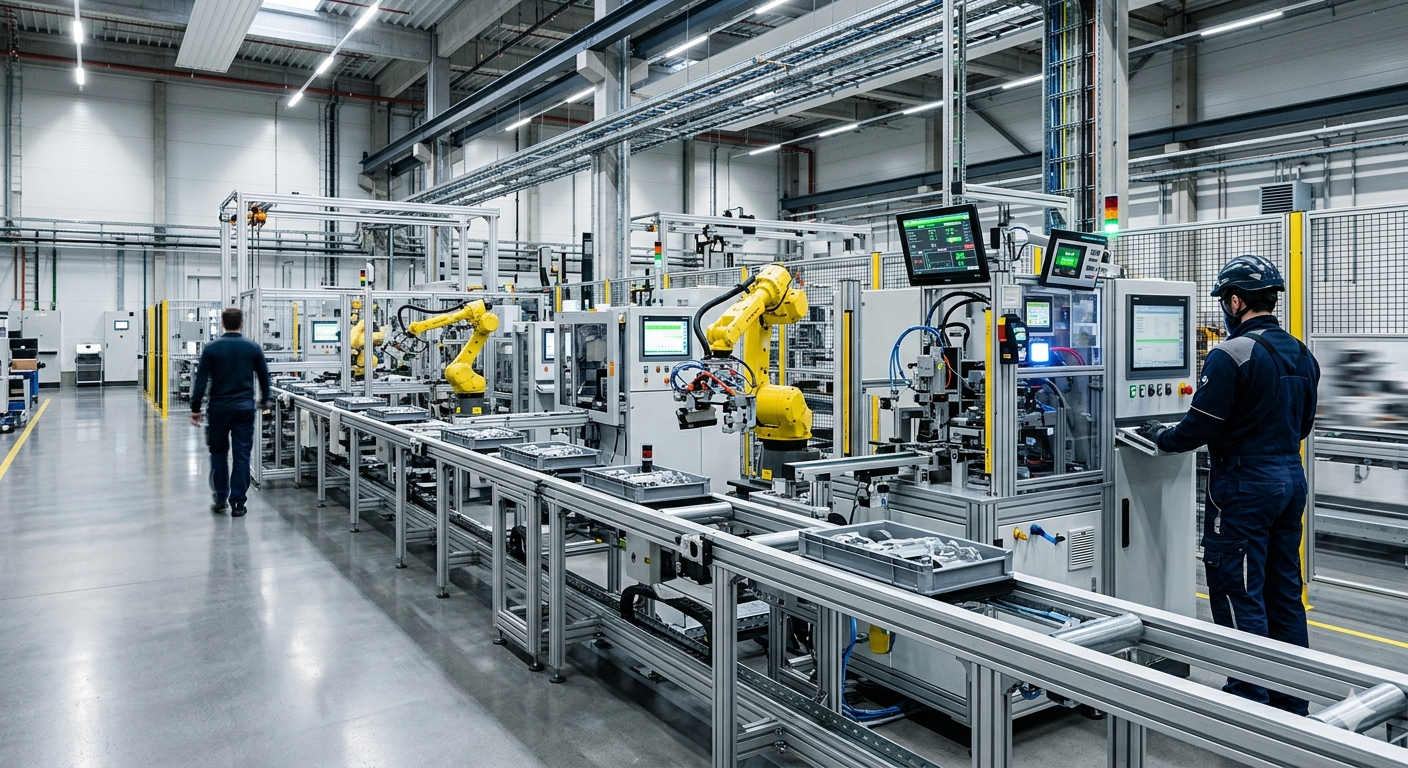
AI on the Factory Floor: Practical Applications That Don’t Require a Data Science Team
Most manufacturers think implementing AI means hiring data scientists and overhauling their entire operation. The reality is far simpler. Today's AI tools are designed for practical, immediate deployment without requiring advanced technical expertise or massive upfront investment.
Why It Matters
Manufacturing has always been about efficiency, quality control, and predictable output. AI amplifies these strengths by automating routine decisions, catching quality issues faster than human inspection, and optimizing processes that were previously based on experience and intuition. The difference is that modern AI tools work with existing equipment and systems, making adoption accessible to manufacturers of any size.
How It Impacts Businesses
Smart manufacturers are using AI to solve problems they've lived with for years. Predictive maintenance alerts prevent costly downtime by identifying equipment issues before they cause failures. Vision systems catch defects that slip past human inspectors, reducing waste and customer complaints. Inventory optimization ensures parts are available when needed without tying up capital in excess stock.
The competitive advantage goes beyond operational improvements. Companies using AI can respond faster to order changes, deliver more consistent quality, and operate with leaner staffing during labor shortages. Meanwhile, manufacturers still relying on manual processes find themselves struggling to meet delivery commitments and maintain margins.
What Steps Companies Can Take
Start with one high-impact area rather than trying to implement AI everywhere at once. Quality control is often the best entry point because the ROI is immediate and measurable. Install vision inspection systems on critical production lines to catch defects that human inspectors might miss during long shifts or when fatigue sets in.
Implement predictive maintenance on your most expensive equipment. Modern sensors can monitor vibration, temperature, and performance patterns to predict when maintenance is needed. This prevents unexpected breakdowns that shut down production and require emergency repairs at premium costs.
Consider inventory optimization software that learns your demand patterns and supplier lead times. These systems automatically adjust reorder points and quantities based on seasonal trends, production schedules, and market conditions. The result is fewer stockouts without excess inventory consuming warehouse space.
For production scheduling, AI can optimize line efficiency by considering setup times, operator skills, and material availability. These systems often identify scheduling improvements that experienced planners miss because they can process far more variables simultaneously.
For more on evaluating AI implementations, see What Every Business Leader Needs to Know About AI Before Adopting It.
How an MSP Helps
Implementing AI on the factory floor requires reliable network infrastructure, secure data handling, and integration with existing systems. Many manufacturers discover their current IT setup isn't ready for AI workloads, especially when it involves real-time processing or cloud connectivity.
An experienced MSP ensures your network can handle the data throughput AI systems generate. Vision inspection systems, for example, process high-resolution images continuously and need reliable bandwidth to function properly. Edge computing solutions keep processing local while maintaining cloud connectivity for analysis and updates.
Security becomes critical when AI systems connect to production networks. A cybersecurity incident that reaches manufacturing systems can shut down production entirely. MSPs implement network segmentation, monitor for threats targeting industrial systems, and maintain security without disrupting operations.
Integration challenges arise when AI tools need to work with existing ERP, MES, or legacy equipment systems. MSPs have experience connecting modern AI applications with older industrial protocols and ensuring data flows reliably between systems that weren't designed to work together.
Best Practices and Key Takeaways
Choose AI applications that solve specific, measurable problems rather than implementing technology for its own sake. Start with areas where human judgment is already stretched thin or where consistency is critical to quality outcomes.
Ensure your team understands how AI recommendations should influence their decisions. The goal is augmenting human expertise, not replacing it entirely. Train operators to recognize when AI alerts require immediate action versus when they can be addressed during planned maintenance windows.
Plan for data quality before deploying AI systems. Clean, consistent data produces reliable AI insights, while poor data quality leads to false alerts and missed problems. Establish procedures for maintaining the sensors, cameras, and other input devices that feed your AI applications.
Budget for ongoing support and updates. AI systems improve over time as they learn from your specific operations, but they require regular tuning and maintenance to deliver consistent value. Factor these costs into your ROI calculations from the beginning.
How much does it cost to implement AI on the factory floor?
Entry-level AI applications like basic vision inspection or predictive maintenance alerts can start around $10,000 to $25,000 per system. More sophisticated implementations involving multiple production lines or complex analytics may require $50,000 to $100,000 investments. However, most manufacturers see ROI within 12 to 18 months through reduced waste, prevented downtime, and improved efficiency.
Do we need to replace existing equipment to use AI?
Most AI applications work with existing equipment through external sensors, cameras, or software integration. Vision systems can be added to current production lines without major modifications. Predictive maintenance sensors attach to equipment you already own. The goal is enhancing what you have rather than replacing functional systems.
What happens if the AI system makes mistakes?
Modern AI systems are designed to work alongside human operators, not replace their judgment entirely. They provide recommendations and alerts that experienced staff can evaluate and act upon. Most applications include confidence levels or thresholds that help operators understand when AI insights should be trusted versus when human verification is needed.
How long does it take to see results from AI implementation?
Quality control applications often show immediate results as soon as they're calibrated to your production standards. Predictive maintenance systems typically need 30 to 90 days to establish baseline performance patterns before generating reliable predictions. Inventory optimization may take a full production cycle to demonstrate improvements in stock levels and availability.
For more insights into how MSPs turn IT challenges into strengths, check out our article in the Indiana Business Journal here.
Every business faces IT challenges, but you don't have to navigate them alone. Core Managed helps businesses secure their data, scale efficiently, and stay compliant. If you're struggling with any of the issues discussed in this blog, let's talk. Give us a call today at 888-890-2673 or contact us here to schedule a chat.