
Hey You, Get Off the Public Cloud
The Rolling Stones sang, “Hey you, get off my cloud,” yet businesses might want to think instead about leaving the public cloud. Weigh these possible public cloud concerns against the advantages of alternate cloud solutions.
When most people think of the cloud, they are thinking of the public cloud. Apple users are on its iCloud. Others may be storing files on Dropbox, OneDrive, Google Cloud, or other services. These all typically have a free level of service. You can pay a monthly fee to upgrade based on the resources you use.
Cloud data is easy to store and access. This can enhance business productivity and efficiency. Added advantages of hosted cloud services – public or private – include the following:
• Speed. Hosted cloud services come on demand or self-service. It’s possible to have cloud resources up and running in a matter of minutes.
• Performance. Cloud providers focus on running secure data centers with the latest infrastructure. It's their job to worry about hardware setup, software patching, and network reliability.
• Scalability. Add cloud capacity without buying equipment or software, or training employees.
• Mobility. Employees can access the cloud from anywhere, on any device.
• Disaster recovery. Providers build in redundancies to ensure uninterrupted service.
• Responsibility. You don't need to invest in on-site equipment, maintenance, and management.
Yet there are some drawbacks to the public cloud. The public cloud is affordable because businesses share resources. The cloud service provider relies on economies of scale. They bring many businesses together for the same services, and it all adds up. But if you’re in an industry with high compliance requirements, the public cloud is a risk.
Advantages of the Private Cloud
The private cloud offers the same benefits as the public cloud – and more.A private cloud solution is dedicated to your business: yours is the only data on the server. This is a more secure solution offering greater visibility and infrastructure control.
A private cloud can be on- or off-premises. On-premise, your IT team sets up, manages, and maintains the cloud infrastructure. Off-premises, a cloud services provider customizes a dedicated and secure cloud.
The private cloud is appealing to regulated industries, government agencies, and tech companies needing strong controls. It is more expensive but allows businesses to easily access data, applications, and backups, and with reduced security risks.
Cloud Flexibility with a Hybrid Option
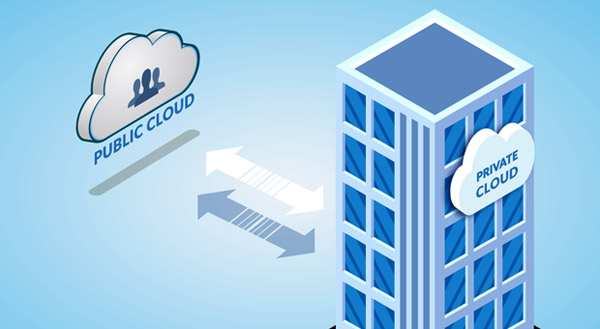
A third alternative is the hybrid cloud. The business takes advantage of both public and private cloud solutions. You decide which apps and data workloads need more security. Meanwhile, the public cloud is available to offer cost savings and efficiency, plus, it can be a backup for sporadic traffic spikes.The hybrid option, though, requires strong integration between private and public cloud deployments. Managing the mix of architectures can prove challenging.
Understanding the difference between these cloud offerings can help you choose the best for your business.
Need help migrating to the cloud or changing your cloud solution? Our IT experts can help you weigh the tradeoffs and determine the best one for your needs. Contact us today at 317-497-5500!