
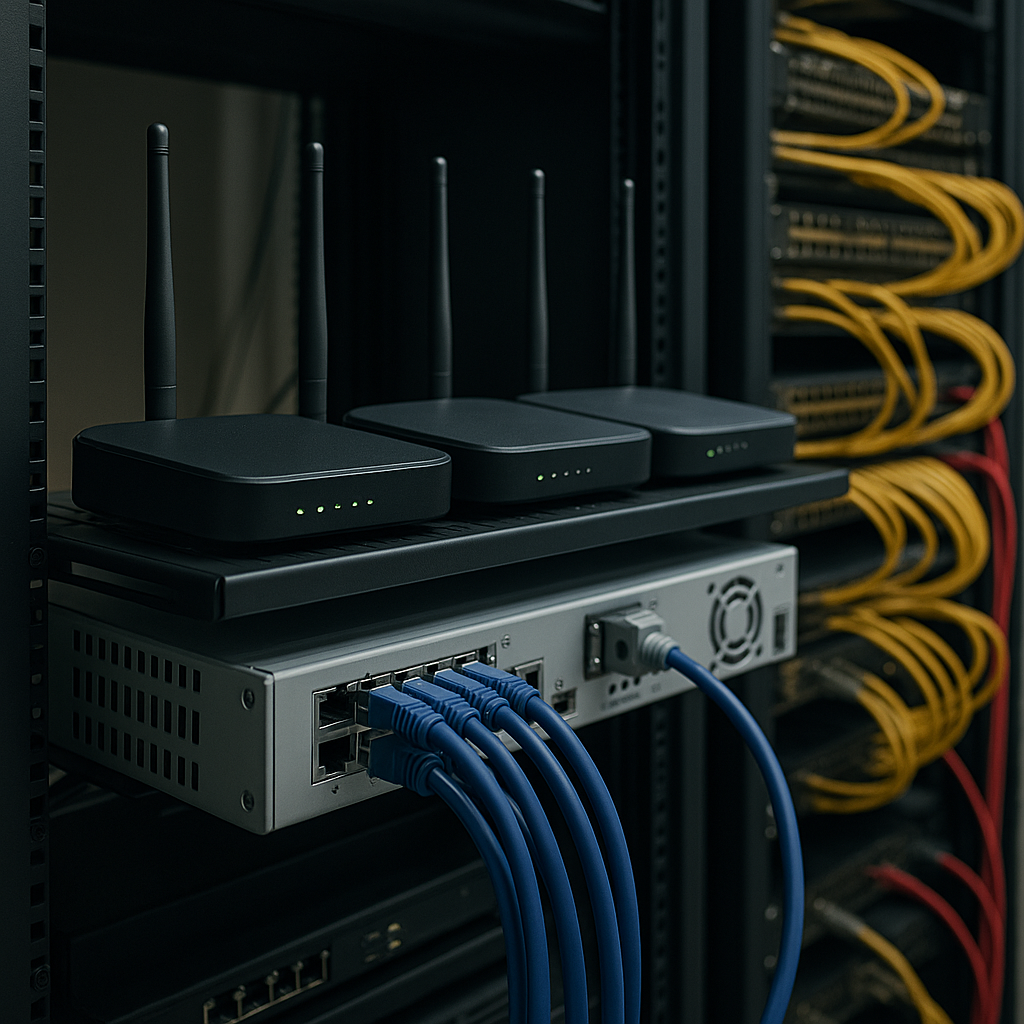
How MSPs Make Network Redundancy Work for Multi-Location Businesses
Executive Summary
For multi-location businesses, a single network outage can disrupt operations across every site. Network redundancy prevents this by ensuring continuous connectivity, even when part of the system fails. Managed Service Providers (MSPs) design, implement, and maintain redundancy strategies that keep branch offices, warehouses, and remote users online, protecting productivity and revenue from downtime.
Why Network Redundancy Matters
Network redundancy is the practice of building backup pathways for internet and internal network connections. If one connection fails, traffic automatically reroutes through a secondary link, keeping the business operational.
For organizations with multiple sites, this is more than a technical safeguard—it’s a business continuity necessity. Even a brief disruption can mean:
Lost productivity across departments and locations
Missed customer communications and delayed orders
Disrupted VoIP or cloud-based tools like ERP and CRM systems
Reduced trust from clients relying on consistent service
Network redundancy transforms the network from a single point of failure into a resilient infrastructure that supports uptime guarantees, performance, and customer satisfaction.
How Network Disruptions Impact Multi-Location Businesses
Multi-location organizations often rely on shared applications, centralized data, and cloud platforms. When connectivity is lost at one site, ripple effects occur throughout the entire network.
Key risks include:
Operational bottlenecks: Teams in satellite offices may be unable to access shared drives or production systems.
Communication breakdowns: VoIP calls, Teams meetings, and cloud-based messaging can drop mid-conversation.
Financial losses: Even an hour of downtime can cost thousands in lost revenue and labor costs.
Security risks: Emergency rerouting or manual workarounds can expose systems to vulnerabilities.
A redundant network ensures these interruptions never occur by having failover systems that activate instantly.
What Steps Companies Can Take to Build Network Resilience
Building redundancy into a distributed network involves more than simply adding a second internet connection. It requires planning, design, and ongoing management. Key steps include:
Assess Network Topology:
Review how data flows between locations and identify single points of failure.Implement Diverse Internet Providers:
Use multiple ISPs to prevent reliance on a single vendor or physical line.Adopt SD-WAN (Software-Defined Wide Area Network):
SD-WAN intelligently manages multiple connections, automatically routing traffic for optimal performance and uptime.Deploy Backup Hardware and Power:
Keep redundant routers, firewalls, and UPS systems ready for automatic failover.Monitor 24/7:
Proactive monitoring ensures issues are detected and resolved before users experience downtime.Test Regularly:
Conduct routine failover tests to confirm redundancy systems activate as designed.
How an MSP Helps Multi-Location Businesses Build Network Redundancy
Partnering with an MSP gives companies access to both technology and expertise that internal teams may lack. A qualified MSP will:
Design Custom Redundancy Plans: Tailor network architecture for each location’s bandwidth, application, and security needs.
Leverage Advanced Tools: Implement SD-WAN, VPN, and traffic management solutions that ensure seamless connectivity.
Manage Provider Relationships: Handle multiple ISPs and contracts while maintaining accountability for uptime.
Monitor and Maintain Continuity: Use 24/7 monitoring and automated alerts to prevent outages before they occur.
Integrate Cybersecurity: Ensure backup paths are secure and compliant with data protection standards.
By partnering with an MSP, businesses can eliminate the complexity of managing multi-location redundancy and focus on performance instead of outages.
Best Practices and Takeaways
To maximize uptime across multiple sites:
Prioritize redundancy during infrastructure planning, not after outages occur.
Combine network diversity (multiple ISPs) with technology redundancy (hardware and software failover).
Use SD-WAN for centralized visibility and dynamic rerouting.
Conduct quarterly testing of failover systems.
Rely on an MSP for proactive monitoring, vendor management, and expert guidance.
When implemented properly, network redundancy not only prevents costly downtime but also provides the foundation for scalability and business growth.
Frequently Asked Questions
What is network redundancy in simple terms?
Network redundancy means having a backup connection or system that automatically takes over when your main connection fails.
Do all multi-location businesses need redundancy?
Yes. If operations, communication, or production depend on online systems, redundancy is essential to prevent downtime across multiple sites.
How often should redundancy systems be tested?
Testing should occur quarterly or after any major network change to ensure failover paths still work correctly.
Is redundancy expensive to implement?
While there is an upfront investment, the cost of downtime far exceeds the expense of redundant infrastructure. An MSP can design cost-effective solutions tailored to your needs.
How MSPs Deliver Measurable Uptime
MSPs help multi-location organizations stay connected, compliant, and productive by combining technical expertise with proactive monitoring and design. The result is a network that anticipates issues before they cause disruptions—keeping every branch, employee, and client online when it matters most.
For more insights into how MSPs turn IT challenges into strengths, check out our article in the Indiana Business Journal here.
Every business faces IT challenges, but you don’t have to navigate them alone. Core Managed helps businesses secure their data, scale efficiently, and stay compliant. If you’re struggling with any of the issues discussed in this blog, let’s talk. Give us a call today at 888-890-2673 or contact us here to schedule a chat.