
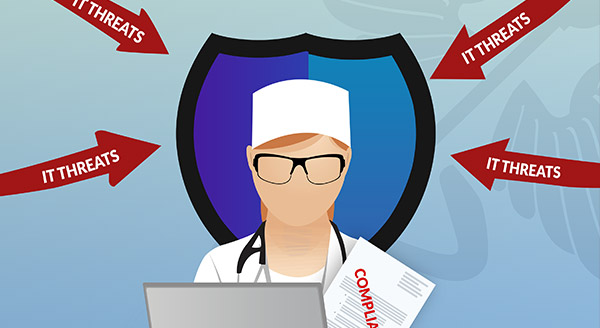
Is Healthcare Compliance Enough?
The healthcare industry is a top target for cybercriminals. Healthcare providers hold patients’ personal and financial data. Plus, they offer a critical service and could be more likely to pay ransom to get systems back up and running. Recognizing the threat, industry regulators have instituted cybersecurity standards. Noncompliance is costly, but the real question is whether meeting the standards is enough.
With growing threats to the healthcare industry, meeting compliance standards is important. Achieving compliance with industry standards indicates a healthcare provider has met the minimum, but this still may not be enough.
Compliant, after all, does not mean cybersecure, not as rigorously as required to protect patient data and electronic health records, or to avoid the damage of a ransomware attack or system downtime caused by another type of virus.
Consider who is making the rules about compliance. How agile can they be? Industry-wide standards are not established quickly. That means medical compliance will never be able to keep up with the pace of change in cyberthreats.
Healthcare Compliance Focal Points
Healthcare compliance focuses on specific components of cybersecurity and patient privacy. There are rules about:
- who can access patient data;
- controlling and tracking access;
- using and disclosing patient data;
- how to safely store and or discard personal and financial data;
- steps to take if a breach is detected;
- training staff with access to protected data.
Nevertheless, thousands of compliant healthcare organizations still get breached every year.
Why You Need More than Compliance
It is important to note that compliance protects the healthcare user first. Securing the healthcare provider's environment means authenticating users, encrypting data, and more.
Reacting to the latest compliance policy statement from the industry regulator isn't enough. Protecting against new threats also means keeping up to date on the latest.
If that sounds like a lot of work, it is.
Healthcare providers want to keep patients healthy and protect their health. Who has time to learn about new cyber exploits, inventory technology, or audit systems?
Working with a managed service provider (MSP), healthcare providers gain a valuable partner. An MSP can do a risk assessment. These IT experts can also recommend the best data backup, plus, assist with business continuity planning. They can watch all access points in the healthcare environment. Beyond desktops this can also mean:
- mobile devices such as tablets or cell phones;
- Internet of Medical Things devices, including digital stethoscopes;
- third-party system integration.
Partner with an MSP that understands healthcare cybersecurity – that's both compliance and technical, physical, and administrative safeguards needed. Doctors want their patients to be proactive in disease prevention. An MSP takes action in advance to avoid cyber viruses and keep data secure. Contact us now at 317-497-5500.