
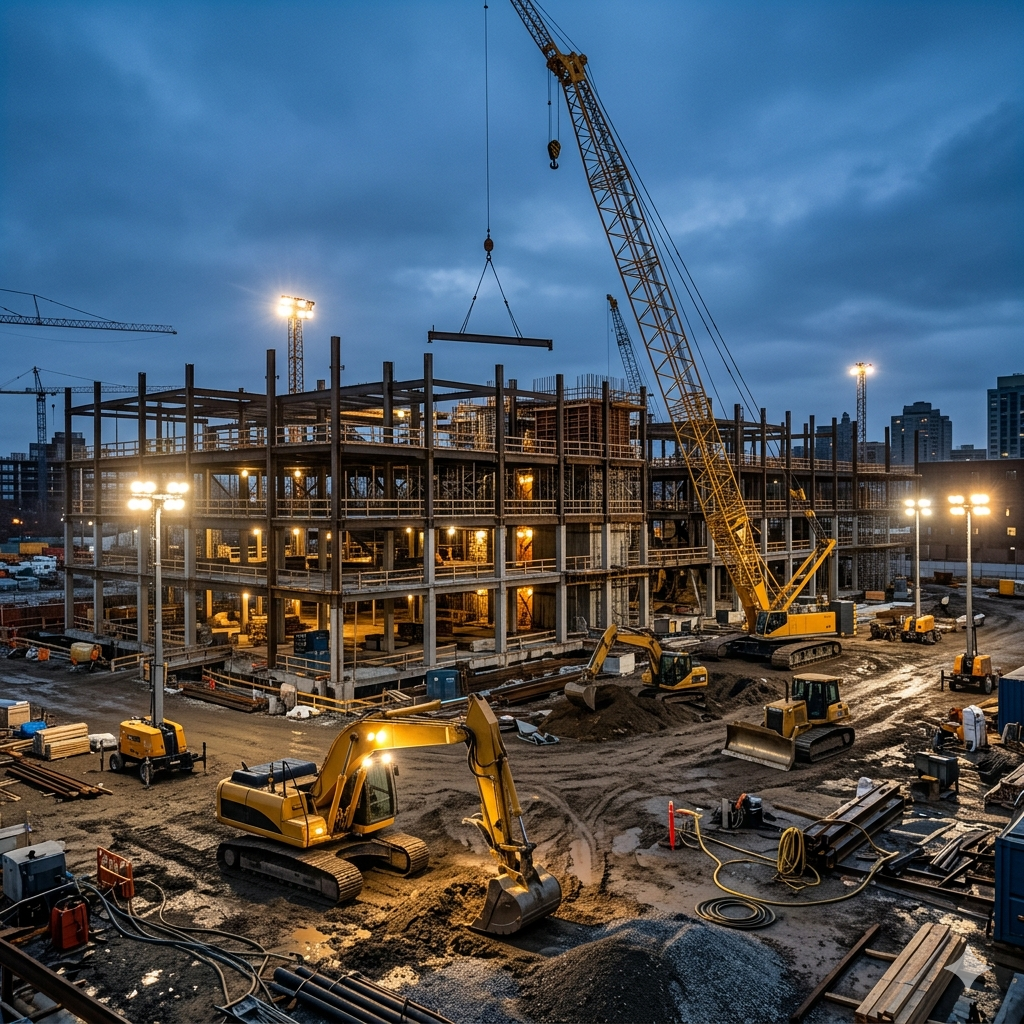
What Happens When A Cyberattack Shuts Down An Active Job Site
Executive Summary: When cybercriminals target construction companies, the fallout extends far beyond stolen data. Active job sites can grind to a halt, costing contractors thousands per day in delays, penalties, and emergency recovery efforts.
Why This Matters More Than Ever
Construction companies have become prime targets for cybercriminals, and the stakes keep rising. Unlike office-based businesses that can temporarily shift to paper processes, construction operations depend on digital systems to coordinate crews, track materials, manage schedules, and communicate with clients in real time.
The reality is stark: when a cyberattack hits during peak construction season, contractors face a perfect storm of lost productivity, missed deadlines, and financial penalties. What makes this worse is that construction firms often assume their "hands-on" industry offers natural protection from digital threats. That assumption can be devastating.
Attackers specifically target construction companies because they know the pressure to get back online quickly. Contractors will pay almost anything to avoid missing project milestones or losing major clients. This desperation makes the industry a lucrative hunting ground for ransomware groups.
How Cyberattacks Impact Active Construction Operations
When cybercriminals strike an active job site, the immediate consequences cascade through every aspect of the operation:
Project management systems go dark. Crews lose access to blueprints, schedules, change orders, and safety protocols. Foremen can't track progress or coordinate with subcontractors. Project timelines become guesswork.
Supply chain coordination breaks down. Automated inventory systems stop working. Material delivery schedules become invisible. Contractors lose visibility into what's been ordered, what's en route, and what needs to be reordered.
Financial systems freeze. Payroll processing stalls. Invoice approvals halt. Expense tracking stops. Cash flow management becomes impossible just when emergency recovery costs are mounting.
Client communication fails. Customer portals go offline. Progress reports can't be generated. Change order approvals get delayed. Client confidence erodes rapidly when they can't get updates on their investment.
Equipment and vehicle tracking disappears. GPS systems for heavy machinery stop reporting. Fleet management tools go dark. Equipment maintenance schedules become unavailable right when crews need every machine operational.
The real damage extends beyond the initial attack window. Even after systems come back online, construction companies face weeks of catching up on delayed processes, reconciling data gaps, and rebuilding client trust.
The True Cost of Construction Cyber Downtime
Industry analysis shows the average construction cyber incident costs companies $150,000 to $500,000, but those numbers don't capture the full picture for active job sites:
Daily delay penalties add up fast. Many construction contracts include penalty clauses for missed milestones. A single day of cyber downtime can trigger $10,000 to $50,000 in contractual penalties on large projects.
Crew labor costs continue without productivity. While IT systems are down, contractors still pay full crews who can't access the information they need to work efficiently. This idle time compounds quickly across multiple job sites.
Emergency recovery expenses mount. Bringing in cybersecurity consultants, purchasing emergency equipment, and implementing workaround processes creates unbudgeted costs that can exceed the original attack damage.
Client relationships suffer long-term damage. Construction contracts often represent multi-year relationships worth hundreds of thousands or millions of dollars. A cyber incident that delays project completion can cost future bid opportunities with that client and others who hear about the disruption.
Insurance complications extend the pain. Many construction insurance policies have limited cyber coverage. Contractors discover too late that their general liability doesn't cover cyber incidents, leaving them personally liable for recovery costs and client damages.
For companies managing multiple concurrent projects, a cyberattack can create a domino effect where delays on one job site cascade to others, multiplying the financial impact across the entire business.
What Steps Companies Can Take
Construction companies can't eliminate cyber risk, but they can dramatically reduce their exposure and recovery time through practical preparation:
Implement offline-accessible backups for critical systems. Job site plans, contact lists, and safety protocols should exist in formats that remain accessible even when digital systems fail. This means maintaining updated paper copies of essential documents at each active site.
Establish alternative communication channels. When email and project management systems go down, crews need backup ways to communicate. This includes maintaining current phone trees, establishing radio protocols, and ensuring site supervisors have direct contact information for key personnel.
Create vendor emergency contact procedures. When digital procurement systems fail, contractors need direct relationships with suppliers who can process orders manually. This means maintaining current phone and fax contacts for critical material vendors and having backup ordering procedures in place.
Develop manual project tracking capabilities. While digital project management tools offer efficiency, construction companies need fallback procedures for tracking progress, managing change orders, and coordinating subcontractors when systems are compromised.
Secure remote access carefully. Many cyber incidents start when attackers exploit weak remote access to job site systems. Using multi-factor authentication and limiting access to essential personnel can prevent many attacks.
For more on building comprehensive emergency procedures, see The Business Continuity Checklist Every Company Should Complete This Quarter.
How an MSP Helps Construction Companies Stay Protected
Managed service providers understand that construction companies need cybersecurity solutions designed for their unique operating environment. This means protection that works both in air-conditioned offices and dusty job trailers.
Network monitoring that covers all locations. Construction MSPs implement monitoring systems that protect not just the main office, but also temporary job site networks, remote equipment, and mobile devices used across multiple locations.
Backup systems designed for construction workflows. Rather than generic backup solutions, construction-focused MSPs create recovery plans that prioritize the systems construction companies need first: project management, scheduling, financial systems, and client communication tools.
Security training that addresses construction-specific threats. Generic cybersecurity awareness doesn't prepare construction employees for the phishing attacks and social engineering tactics specifically targeting their industry. Construction MSPs provide training that covers threats like fake vendor invoices, fraudulent change orders, and job site impersonation schemes.
Emergency response that understands construction urgency. When a cyberattack hits during peak construction season, contractors need immediate response. Construction MSPs maintain emergency contact procedures and rapid response capabilities designed around construction industry timelines.
Compliance support for construction regulations. Many construction projects require specific data security and privacy protections. Construction MSPs help ensure that cybersecurity measures meet both industry standards and individual project requirements.
For more on protecting construction operations from cyber threats, see Jobsite to Back Office: Why Construction Firms Need a Unified Cybersecurity Strategy.
Best Practices and Key Takeaways
Protecting active construction operations from cyber threats requires a combination of technology, procedures, and employee awareness:
Test your backup procedures regularly. Many companies discover their backup systems don't work properly only after a real emergency. Construction companies should test recovery procedures quarterly and ensure backup systems include all critical job site information.
Keep emergency contact information current. When digital communication fails, having accurate phone numbers for clients, subcontractors, suppliers, and key personnel becomes critical. Update these lists monthly and ensure multiple people have access.
Limit digital access to essential personnel. Not every crew member needs access to every system. Implementing role-based access controls reduces the number of potential entry points for attackers.
Maintain visibility into all connected devices. Construction job sites often include numerous connected devices, from equipment sensors to security cameras. Understanding what's connected to your network helps identify potential vulnerabilities.
Plan for the worst-case scenario. Every construction company should have documented procedures for continuing operations when primary systems fail. This includes manual processes for essential functions like payroll, client communication, and safety reporting.
The goal isn't to prevent every possible cyber incident, but to ensure that when attacks occur, they don't shut down active job sites or destroy client relationships.
Frequently Asked Questions
How long does it typically take construction companies to recover from a cyberattack?
Recovery time varies significantly based on preparation and the scope of the attack. Companies with proper backup systems and recovery procedures often restore critical operations within 24-48 hours. Those without preparation can face weeks of downtime, during which active job sites may need to shut down completely or operate with severe limitations.
Can construction companies continue working during a cyberattack?
Limited operations are often possible, but efficiency drops dramatically. Crews may be able to continue basic construction tasks, but coordination becomes difficult without digital project management tools. The bigger challenge is maintaining safety compliance and client communication when documentation systems are compromised.
What type of cyber insurance do construction companies need?
Standard general liability insurance rarely covers cyber incidents adequately. Construction companies need specific cyber liability coverage that includes business interruption costs, client notification expenses, and regulatory fines. The policy should also cover delays and penalties related to project completion deadlines.
Are smaller construction companies at less risk than larger ones?
Smaller construction firms often face higher relative risk because they typically have fewer cybersecurity resources while still managing valuable client data and project information. Cybercriminals increasingly target smaller companies specifically because they expect weaker defenses and faster payment of ransom demands.
For more insights into how MSPs turn IT challenges into strengths, check out our article in the Indiana Business Journal here.
Every business faces IT challenges, but you don't have to navigate them alone. Core Managed helps businesses secure their data, scale efficiently, and stay compliant. If you're struggling with any of the issues discussed in this blog, let's talk. Give us a call today at 888-890-2673 or contact us here to schedule a chat.