
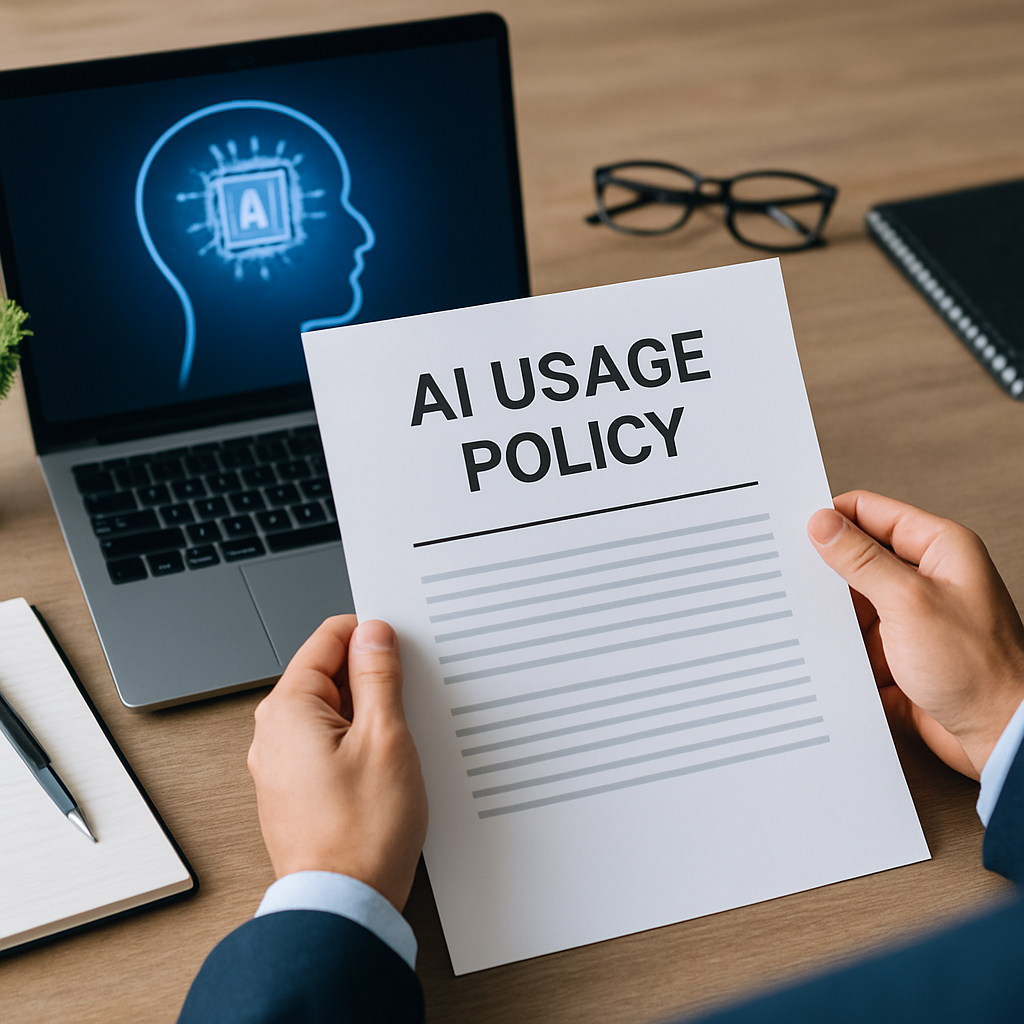
Why Every Business Needs an AI Usage Policy Before Employees Start Using AI
Executive Summary
Many employees are already using AI tools at work without leadership knowing it. This creates avoidable risks around data exposure, compliance, and inconsistent decision-making. An AI usage policy gives companies clear guardrails so teams can use AI safely, confidently, and productively. With the right structure in place, an MSP or IT compliance firm can help implement secure tools that support innovation rather than restrict it.
Why an AI Usage Policy Matters
AI adoption is happening faster than most organizations can govern. Employees paste information into public tools, ask AI for help with decisions, and share content with systems that may store or train on that data. Without a policy, there are no consistent expectations about what is allowed, what is prohibited, or what tools are safe.
A policy establishes:
Approved AI platforms
Data types that may or may not be used
Acceptable use guidelines
Roles and responsibilities
Security and compliance guardrails
Clear direction prevents accidental exposure of client data, internal information, or regulated content.
How Unsupervised AI Use Impacts Businesses
Unmanaged AI activity introduces risks that many companies do not immediately recognize. These risks often fall into three categories that directly affect operations, security, and reputation.
1. Data Exposure
When employees input internal or customer data into public AI tools, that information may be stored, logged, or used for training. This can introduce issues such as:
Accidental disclosure of sensitive information
Loss of control over where data is stored
Potential violation of confidentiality agreements
2. Compliance Gaps
Industries with regulatory requirements face additional challenges. AI misuse can quickly violate frameworks such as:
HIPAA
PCI
CMMC
State privacy laws
Without a policy, employees may unknowingly create compliance violations.
3. Operational Inconsistency
If each employee uses AI differently, information becomes fragmented. Teams may rely on AI outputs without verification, use conflicting tools, or generate inconsistent messaging.
An AI policy aligns the entire organization around common expectations.
What Steps Companies Can Take to Implement a Policy
Building an AI usage policy does not require complex technical expertise. Most organizations begin with a few foundational steps.
1. Define What AI Tools Are Approved
Organizations should determine which platforms:
Support required security standards
Offer enterprise-grade privacy controls
Allow data training to be disabled
Provide clear data-handling documentation
2. Document Prohibited Data Types
Companies must specify what cannot be placed into AI tools, such as:
Client identifiers
Financial information
Credentials
Regulated data
Clarity removes guesswork for employees.
3. Create Acceptable Use Guidelines
These guidelines establish how AI can assist with:
Drafting communication
Researching public information
Summarizing internal content
Supporting planning and documentation
The goal is safe productivity, not restriction.
4. Train Employees on Responsible Use
Teams should learn:
How to choose the right tools
How to avoid exposing sensitive data
How to verify AI-generated content before using it
Training ensures consistent, responsible adoption.
How an MSP Helps With AI Governance
Most small and mid-sized businesses benefit from outside guidance when implementing AI safely. An MSP or IT compliance firm can support this work by providing:
AI Risk Assessments
Reviews of tools, workflows, and data handling practices.
Policy Development and Customization
Creation or refinement of AI usage policies tailored to the organization.
Secure AI Platform Configuration
Ensuring settings such as data training, access control, and device protections are properly configured.
Ongoing Monitoring and Support
Assistance in reviewing risk, updating policies, and adjusting security measures as AI tools evolve.
When companies partner with an MSP, they gain structured guardrails that enable them to use AI confidently while protecting business data.
Frequently Asked Questions
1. Do all companies need an AI usage policy?
Yes. Even if employees are not intentionally using AI, most organizations discover that informal or untracked use is already happening.
2. Does an AI policy limit innovation?
No. A well-designed policy encourages innovation by guiding employees toward safe, approved tools.
3. How long does it take to implement a policy?
Most organizations can establish a baseline policy within a short time, especially when working with an MSP or IT compliance firm.
4. Will AI replace internal IT teams?
No. AI supports IT work but does not replace the expertise required for security, compliance, and technology strategy.
Summary
AI is quickly becoming part of everyday business workflows. Without clear guardrails, organizations risk exposing sensitive data or operating outside compliance requirements. A structured AI usage policy helps companies adopt AI safely while protecting customer information and internal systems. MSPs and IT compliance firms play a critical role in helping businesses build, implement, and maintain secure AI practices that support long-term productivity and growth.
For more insights into how MSPs turn IT challenges into strengths, check out our article in the Indiana Business Journal here.
Every business faces IT challenges, but you don’t have to navigate them alone. Core Managed helps businesses secure their data, scale efficiently, and stay compliant. If you’re struggling with any of the issues discussed in this blog, let’s talk. Give us a call today at 888-890-2673 or contact us here to schedule a chat.