
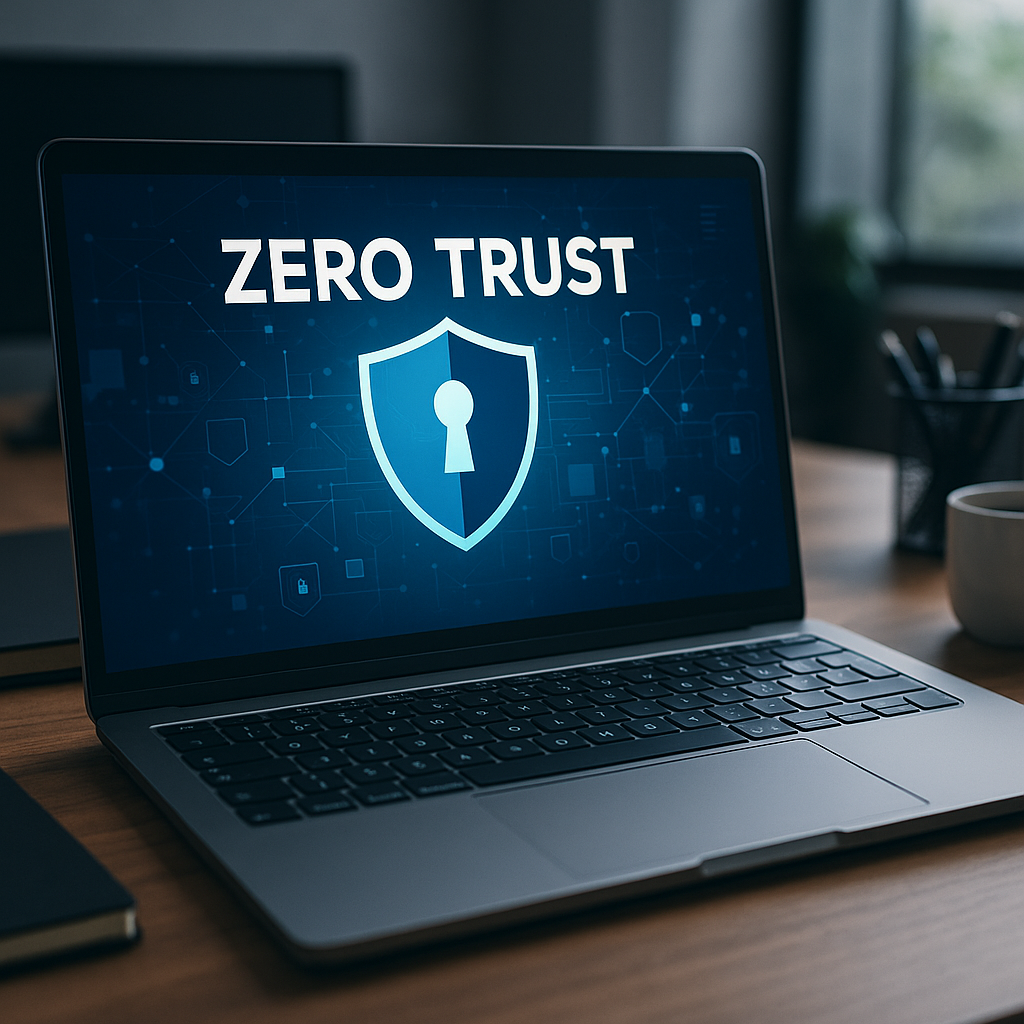
Zero Trust Security: Why Businesses Need a Modern Approach to Cyber Defense
Traditional perimeter-based security models are no longer enough to keep organizations protected. With remote workforces, cloud applications, and increasingly sophisticated cyber threats, relying on firewalls and network borders to keep bad actors out leaves too many gaps. That’s where Zero Trust comes in—a modern cybersecurity framework built on the principle of “never trust, always verify.”
What Is Zero Trust Security?
Zero Trust security is a strategic approach that requires all users—inside or outside the network—to be authenticated, authorized, and continuously validated before gaining or maintaining access to systems and data. Unlike older models that assume everything inside a network is safe, Zero Trust treats every access request as a potential threat.
This model is built on a few key principles:
Strict identity verification for every user and device
Least privilege access to minimize risk exposure
Continuous monitoring of access and behavior
Microsegmentation to reduce lateral movement if a breach occurs
Multi-factor authentication (MFA) and strong endpoint controls
Why Traditional Security Models Fall Short
Perimeter-based defenses worked when workforces were centralized and data stayed within on-premises systems. That’s rarely the case anymore. Today’s IT environments are hybrid, with users connecting from various locations, often using personal devices, and accessing cloud-based applications like Microsoft 365, Salesforce, and Google Workspace.
This new complexity creates blind spots in conventional security. A single compromised credential can give attackers wide-ranging access if protections like Zero Trust aren’t in place.
The Role of MSPs in Zero Trust Implementation
Managed Service Providers (MSPs) are well-positioned to help businesses adopt and manage a Zero Trust strategy. Implementing Zero Trust isn’t a one-size-fits-all project—it requires thoughtful planning, the right technology stack, and ongoing maintenance.
MSPs help organizations:
Assess risks and identify gaps in current cybersecurity infrastructure
Deploy identity and access management (IAM) tools and MFA solutions
Segment networks to contain potential breaches
Integrate logging and monitoring for real-time threat detection
Train users to follow secure access practices
Many MSPs also provide 24/7 monitoring to help detect anomalies and act quickly when something looks suspicious. This is essential in a Zero Trust environment where continuous validation is key.
Why Zero Trust Matters for Growing Businesses
Cybercriminals often target small and mid-sized businesses because they’re perceived as having weaker defenses. Implementing Zero Trust isn’t just for enterprise-level organizations. In fact, it can be even more critical for smaller teams with limited internal resources.
Zero Trust offers a scalable, flexible model that adapts as your business grows. Whether your data lives in the cloud, on-prem, or somewhere in between, this approach can dramatically reduce your risk exposure.
Getting Started with Zero Trust
Adopting a Zero Trust model doesn’t require a complete IT overhaul from day one. MSPs often recommend a phased approach:
Start with identity and access management
Roll out multi-factor authentication across users and apps
Segment your network and restrict access to sensitive systems
Layer in endpoint protection and monitoring tools
Each of these steps increases your organization’s resilience and moves you closer to a full Zero Trust posture.
The Future of Cybersecurity is Zero Trust
As cyber threats continue to evolve, so must your defenses. Zero Trust is more than a buzzword—it’s a proactive framework that reflects how businesses operate today. Working with an experienced MSP can help your company build a strong foundation and stay ahead of emerging risks.
For more insights into how MSPs turn IT challenges into strengths, check out our article in the Indiana Business Journal here.
Every business faces IT challenges, but you don’t have to navigate them alone. Core Managed helps businesses secure their data, scale efficiently, and stay compliant. If you’re struggling with any of the issues discussed in this blog, let’s talk. Give us a call today at 888-890-2673 or contact us here to schedule a chat.